
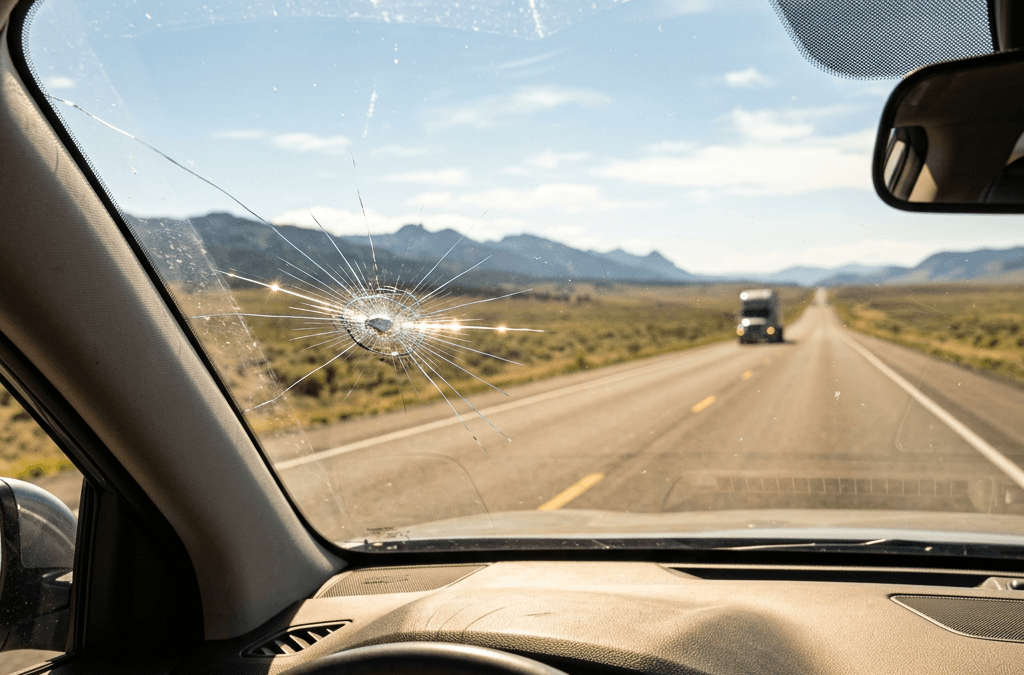
Summer brings beautiful driving weather, but it also marks the peak season for auto glass damage on state highways. High-speed travel combined with heavy seasonal traffic creates a prime environment for airborne road debris. Tourists heading to the geothermal hot springs in Thermopolis often find themselves sharing the highway with heavy commercial trucks, which kick up stray gravel. When a tiny stone strikes a windshield at highway speeds, the impact concentrated on a single point easily overcomes the structural tension of the glass, creating an immediate chip.
Ignoring a minor chip during warm weather is a common mistake that leads to costly replacements. The intense summer sun heats the glass, causing it to expand, while running the air conditioning cools the interior surface. This extreme temperature differential puts immense stress on the damaged area, forcing micro-cracks to spread rapidly across the driver's line of sight. To prevent a small chip from turning into a complete spiderweb crack, finding a reliable repair team is essential. Drivers can easily find our shop by looking up our Riverton service location or giving our technicians a quick call to discuss immediate repair options.
Table of Contents
- Understanding Chip Sealing and Its Impact on State Highways
- Comparing Windshield Materials and Advanced Protective Films
- Immediate Damage Control: The Tape Trick and Emergency Care
- Wyoming Insurance Rules and Zero-Deductible Glass Coverage
- Common Questions About Highway Glass Damage
- Restoring Your View with Certified Auto Glass Service
Understanding Chip Sealing and Its Impact on State Highways
Wyoming highways undergo extensive maintenance during the warmer months, and chip sealing is the primary method used to preserve asphalt surfaces. This process involves spraying a sticky layer of liquid asphalt onto the road, followed immediately by a layer of small, crushed gravel. While this treatment effectively seals cracks and prevents water from penetrating the road base, it leaves a significant amount of loose gravel on the roadway surface for days before the excess is swept away. Daily commuters navigating the Wind River valley near Riverton frequently encounter these active maintenance zones during the peak of summer.
The Wyoming Department of Transportation explicitly advises motorists traveling through these chip seal work zones to reduce their speed and allow additional space between vehicles. Following other cars too closely in these areas dramatically increases the likelihood of loose stones being kicked up by tires. Even at moderate speeds, a loose stone launched from a tire acts like a projectile against your vehicle's glass. By slowing down and maintaining a generous following distance, drivers can significantly minimize the risk of stone chips and subsequent vehicle damage. If your vehicle does sustain damage in a work zone, exploring our comprehensive glass restoration options can help address the issue before it worsens.
Comparing Windshield Materials and Advanced Protective Films
Modern automotive engineering utilizes different types of glass to balance safety and durability. Windshields are constructed from specialized materials to protect occupants and maintain structural integrity under stress:
- Laminated glass: Composed of two glass sheets bonded by a flexible vinyl interlayer to prevent shattering upon impact.
- Tempered glass: Heat-treated glass designed to break into harmless, pebble-like pieces, typically used for side and rear windows.
- Acoustic glass: Features a specialized sound-dampening interlayer that reduces cabin noise without sacrificing strength.
Some modern vehicles also offer upgrades like chemically strengthened Gorilla Glass for increased resistance to stone impacts. For drivers seeking maximum defense against road debris, clear windshield protection films offer an excellent physical barrier. Often referred to as multi-layer windshield skin, these heavy-duty polyester films are professionally applied to the exterior surface of the auto glass. They function similarly to a mobile phone screen protector, absorbing the kinetic energy of flying rocks and distributing the impact force across a much wider surface area. This significantly reduces the chance of a rock chip forming in the first place while preserving perfect optical clarity. If you are interested in upgrading your vehicle's defense systems, you can reach out to our team to contact our glass specialists for personalized recommendations.
Immediate Damage Control: The Tape Trick and Emergency Care
When a rock inevitably strikes your windshield, taking immediate action can save you from a costly replacement. The most effective temporary measure is a simple trick: placing a small piece of clear packing tape or Scotch tape directly over the fresh chip. This basic step prevents dirt, road grime, moisture, and windshield washer fluid from contaminating the open impact point. Keeping the damaged area perfectly clean ensures that the specialized repair resin can fully penetrate the crack, resulting in a much stronger and nearly invisible professional repair.
During a professional repair, a technician carefully removes any microscopic loose glass fragments from the impact point before injecting a liquid resin into the damage. This resin is then cured using ultraviolet light, which chemically bonds the glass layers back together and restores the structural integrity of the windshield. Performing this process quickly is vital because once a crack expands past a few inches or reaches the outer edge of the glass, the structural boundary is compromised, and a complete windshield replacement becomes the only safe option.
Wyoming Insurance Rules and Zero-Deductible Glass Coverage
Navigating the financial side of auto glass repair requires understanding local insurance regulations. Unlike a handful of states that mandate zero-deductible windshield replacements under comprehensive policies, Wyoming has no such law. Motorists in the state are responsible for paying their standard comprehensive deductible out of pocket unless they have specifically opted for a dedicated glass endorsement or a specialized zero-deductible glass policy from their insurance provider.
Because windshield damage is exceptionally common on local highways, adding a specific glass rider to your insurance policy is often a highly cost-effective decision. Many local drivers find that the nominal monthly increase in their premium is easily offset by the savings of a single rock chip repair or windshield replacement. When dealing with glass damage, our team works directly with major insurance carriers to streamline the claims process, helping you verify your coverage limits and complete the necessary paperwork without unnecessary stress.
Common Questions About Highway Glass Damage
Q: Is it legally permissible to drive with a cracked windshield in Wyoming?
State regulations prohibit operating a vehicle with any windshield damage that obstructs the driver's clear view of the highway. Cracks that spiderweb directly in front of the steering wheel or run horizontally across the primary viewing area can result in a traffic citation. Beyond legal issues, a cracked windshield compromises the structural integrity of the vehicle cabin during an accident.
Q: How long does a professional windshield chip repair typically take?
A standard rock chip repair is a highly efficient process that is usually completed in about thirty minutes. This allows drivers to wait comfortably in our service area while the technician cleans, fills, and cures the damaged area. Once the ultraviolet curing process is complete, the vehicle is immediately ready to return to the road.
Q: Will a professionally repaired rock chip ever spread or fail?
When performed correctly by certified technicians, a professional resin repair is designed to be a permanent fix that lasts for the remaining lifespan of the windshield. The cured resin restores structural strength and prevents the crack from expanding under normal driving conditions. In the rare event that a repaired chip begins to spread, it is typically due to an exceptionally deep secondary fracture that was hidden beneath the initial impact point.
Q: What industry certifications should I look for when choosing a glass technician?
You should look for technicians certified by the Auto Glass Safety Council, which ensures they follow strict industry-standard safety procedures for adhesive curing and glass installation. Additionally, look for manufacturer-specific training that guarantees the team understands the complex driver-assist camera calibrations required during modern windshield replacements.
Q: Can moisture or temperature changes affect a newly repaired windshield?
Once the ultraviolet light cures the specialized resin, the repair is completely stable and impervious to rain, car washes, or temperature shifts. However, exposing an unrepaired chip to moisture or extreme heat before the service is performed can trap contaminants inside, which ruins the visual clarity of the final repair.
Restoring Your View with Certified Auto Glass Service
Maintaining clear visibility and structural safety is essential for any summer road trip. When road debris strikes, addressing the damage immediately prevents a minor inconvenience from turning into a major safety hazard. Our team of certified technicians is dedicated to providing precise, high-quality repairs and replacements that restore your vehicle's safety systems to factory standards.
If you have recently noticed a chip or crack after a highway drive, do not wait for the summer heat to expand the damage. We invite you to visit our service center at 1575 N Federal Blvd, Riverton, WY 82501 to have our specialists assess your glass. You can also connect with our service desk by calling (307) 840-5925 to schedule a prompt repair appointment today.